
Get support at every step
Learning that your child has steroid-refractory acute GvHD can feel scary. But it’s important to know that you are not alone. Support is available to help your family move forward.
Get support resources

Caring for a child with steroid-refractory acute GvHD can feel like a lot at times. This page has tools to help you stay informed and organized. You will also find helpful support resources.

Have questions? We have answers
Get answers to common questions. Learn more about acute GvHD and RYONCIL.

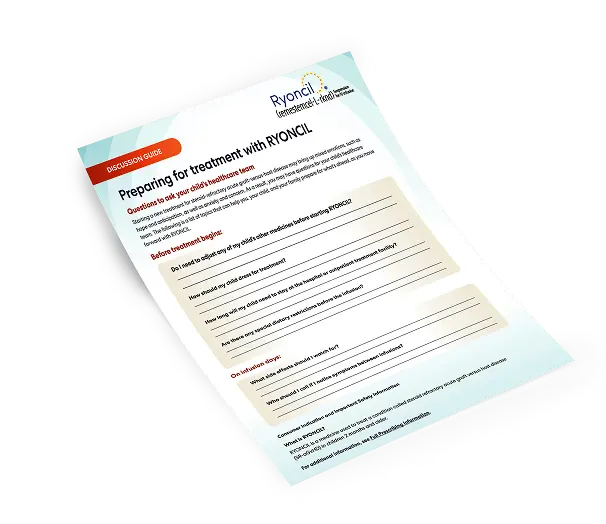
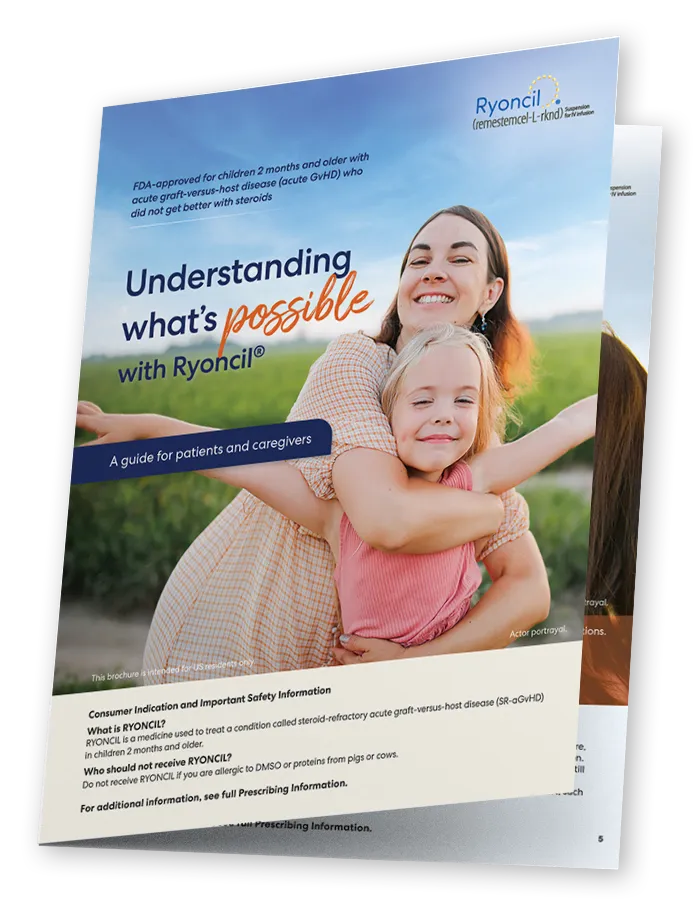
Download and/or print helpful patient information materials to help inform and support your child’s journey with RYONCIL.

MyMesoblast is a savings and support hub. Ask your care team how it can help during RYONCIL treatment.
MyMesoblast team members want to help treatment start as soon as possible. They will work with your child’s care team to handle insurance and benefits questions.
Have questions about paying for treatment? If your child has no insurance (or not enough coverage), talk to your care team. MyMesoblast may be able to help.*
*Eligibility rules apply.

These videos can help inform and empower your child's journey with steroid-refractory acute GvHD.
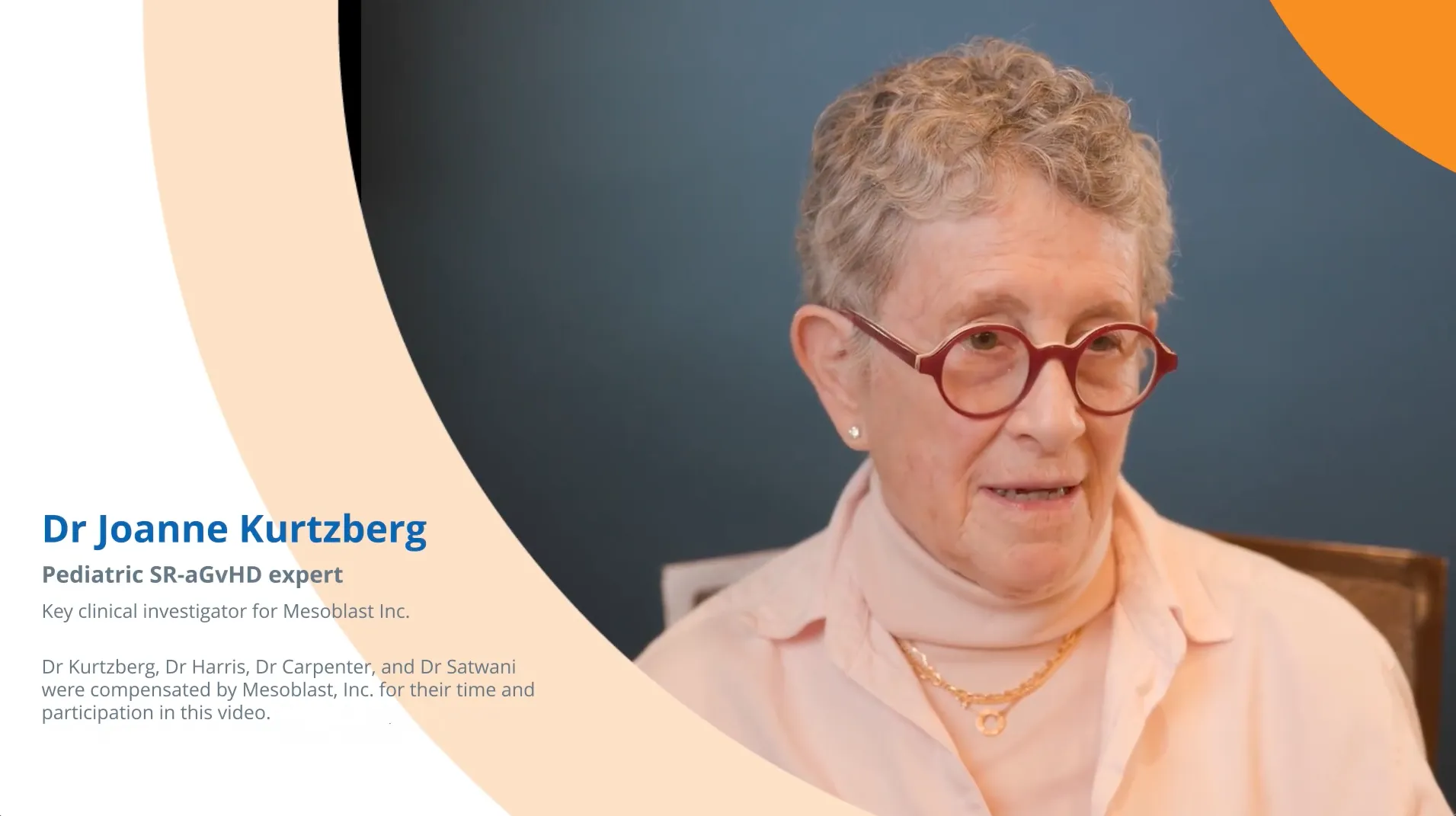
Hear doctors discuss the challenges of treating children with steroid-refractory acute GvHD.
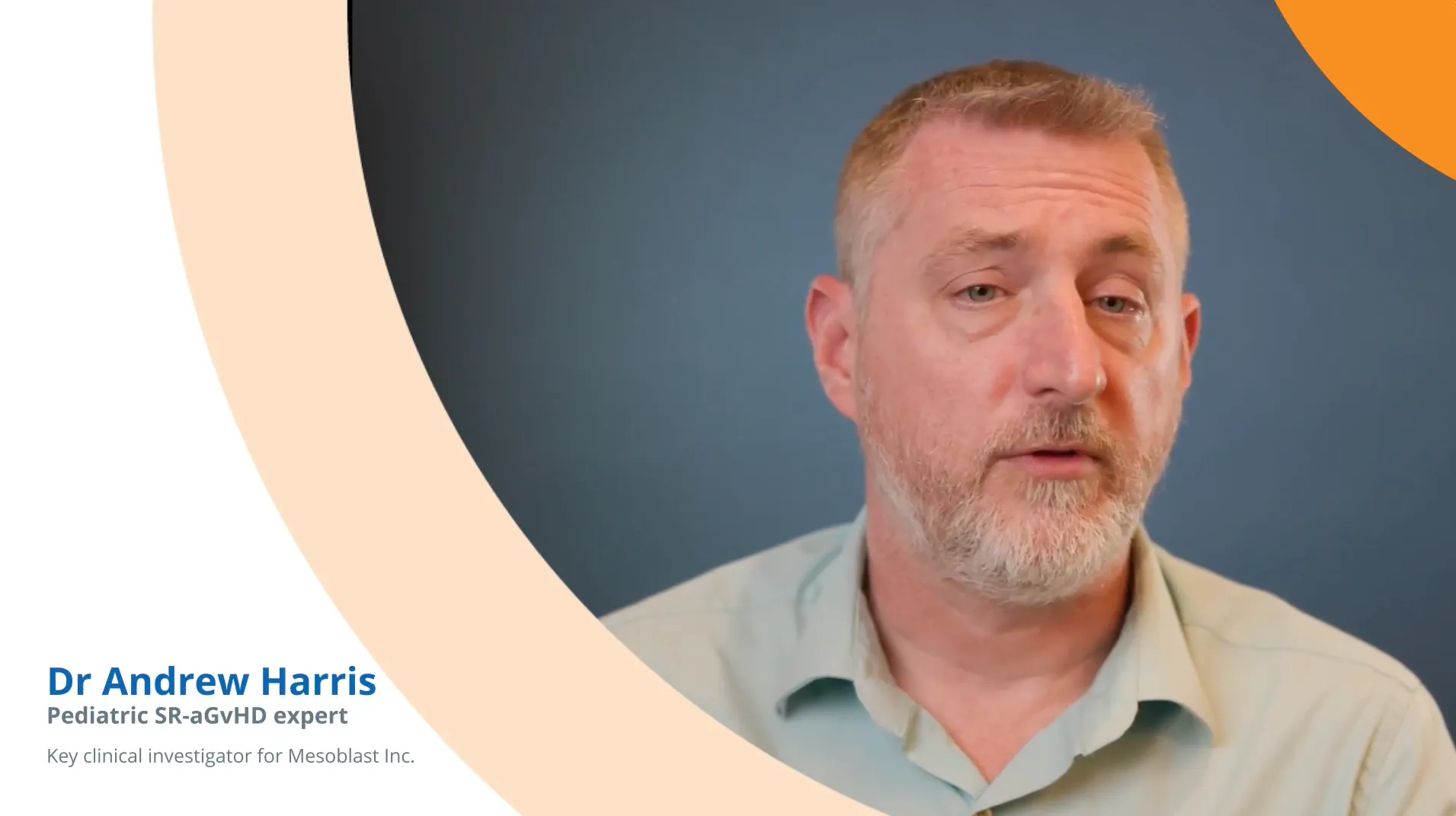
Watch 4 pediatric acute GvHD experts discuss how RYONCIL is making recovery possible for children with acute GvHD who did not get better with steroids

Getting your child the care they need should never feel out of reach
RYONCIL is covered nationwide by most private and government insurance plans. This includes Medicaid in all 50 states, plus Puerto Rico and Washington, DC.

The following organizations provide additional disease information, support, and resources for patients and caregivers.
Website: www.bethematch.org/one-on-one
Phone: 888-999-6743
Email Contact: [email protected]
Website: www.bmtinfonet.org
Phone: 847-433-3313 | Toll Free: 888-597-7674
Website: www.nbmtlink.org
Phone: 800-LINK-BMT (800-546-5268)
Website: www.panfoundation.org
Phone: (866) 316-7263

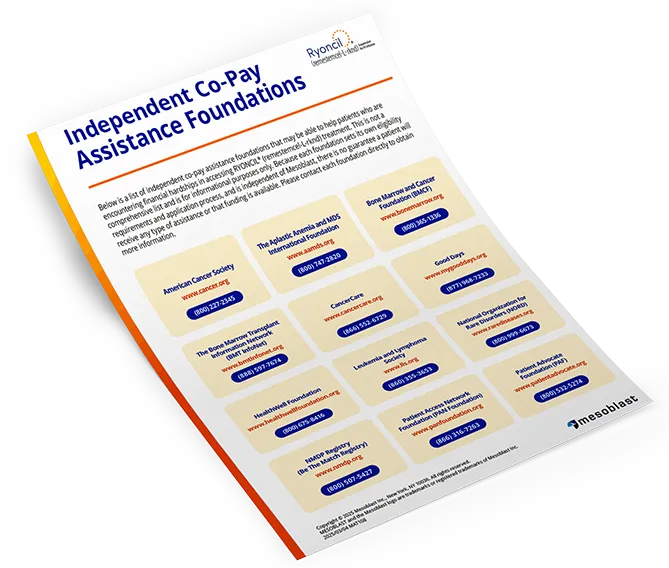
Need help affording treatment? Download to learn more about independent co-pay assistance foundations for eligible patients.
Independent Co-Pay Assistance FoundationsShare
Get support at every step
Learning that your child has steroid-refractory acute GvHD can feel scary. But it’s important to know that you are not alone. Support is available to help your family move forward.
Get support resources
See why recovery is possible with RYONCIL
Learn more about the first and only FDA-approved treatment approved just for children with steroid-refractory acute GvHD.
About RYONCIL
Get the facts about steroid-refractory acute GvHD
Knowledge is power. Learn more about steroid-refractory acute GvHD and how to empower the journey ahead.
Learn more
RYONCIL is a prescription medicine used to treat a condition called steroid-refractory acute graft versus host disease (SR-aGvHD) in children 2 months and older.
Do not receive Ryoncil if you are allergic to DMSO or porcine and bovine proteins (e.g., pigs or cows).
Ryoncil is not recommended if you are pregnant. Talk to your doctor about the risks and benefits of breastfeeding during Ryoncil treatment.
The most common side effects include infections, fever, bleeding, swelling, stomach pain, high blood pressure, vomiting, irregular heartbeat, diarrhea, rash, joint pain, low blood pressure, cough, and trouble breathing.
Tell your doctor about all your medical conditions, allergies, and if you are pregnant or breastfeeding.
You are encouraged to report negative side effects of prescription drugs to the FDA. Visit www.fda.gov/medwatch, or call 1–800-FDA-1088.
For additional information, see full Prescribing Information.