
Learn why recovery is possible with RYONCIL
See results from a study of children with steroid-refractory acute GvHD. See what happened when they got RYONCIL after steroids did not work.
Results with RYONCIL

In the past, children with steroid-refractory acute GvHD had very few treatment choices. RYONCIL is changing that, giving hope to families living with steroid-refractory acute GvHD.
RYONCIL is the first and only FDA-approved steroid-refractory acute GvHD treatment for children 2 months of age and older. It is the only approved option for patients under 12 years of age.
Learn why RYONCIL is differentRYONCIL is different from other medicines used to treat adults with steroid-refractory acute GvHD. It’s a first-of-its kind treatment approved just for children.
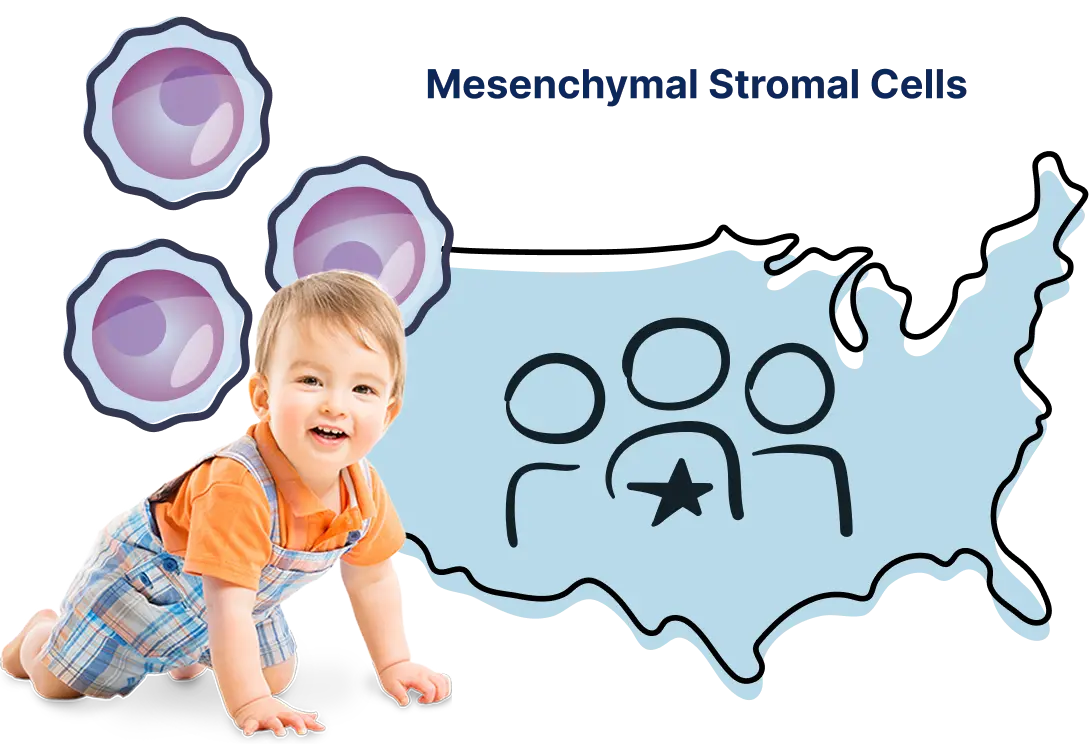
RYONCIL is made from living cells. This is called cell therapy. These cells are called mesenchymal stromal cells (or MSCs). They come from the bone marrow of healthy adult donors in the United States. They have been carefully tested for safety.
Unlike some treatments, RYONCIL does not require donor matching. It’s ready to use when your child needs it. This makes it a convenient option for many families.
RYONCIL is the first and only FDA-approved MSC treatment available in the United States.
RYONCIL works in a different way than a steroid. It’s a special type of cell therapy that may calm the immune system instead of weakening it. This gives your child’s body a chance to recover from steroid-refractory acute GvHD.

Donor stem cells (the “graft”) may send signals to attack healthy cells in the patient, causing the immune system to go into overdrive, resulting in acute GvHD.

Attack signals may cause inflammation that affects the gastrointestinal (GI) tract, liver, and/or skin.

After acute GvHD is diagnosed, doctors may treat with steroids and other medicines. In about half of children, steroids don’t work well enough.

When steroids fail to control acute GvHD, RYONCIL can be used to send special cells into the bloodstream to help calm the immune system.

Inflammation may go down, reducing the number of overactive immune cells.

By calming the inflammation signals, RYONCIL may help bring the immune system back into balance.
RYONCIL is the only steroid-refractory acute GvHD medicine of its kind. It may provide the help you’ve been hoping for.
“When you inject the cells…they modulate the immune system in a way to decrease the inflammation"— Dr Paul Carpenter, acute GvHD expert

Learn why recovery is possible with RYONCIL
See results from a study of children with steroid-refractory acute GvHD. See what happened when they got RYONCIL after steroids did not work.
Results with RYONCIL
Get support at every step
Learning that your child has steroid-refractory acute GvHD can feel scary. But it’s important to know that you are not alone. Support is available to help your family move forward.
Explore support resources
RYONCIL is a prescription medicine used to treat a condition called steroid-refractory acute graft versus host disease (SR-aGvHD) in children 2 months and older.
Do not receive Ryoncil if you are allergic to DMSO or porcine and bovine proteins (e.g., pigs or cows).
Ryoncil is not recommended if you are pregnant. Talk to your doctor about the risks and benefits of breastfeeding during Ryoncil treatment.
The most common side effects include infections, fever, bleeding, swelling, stomach pain, high blood pressure, vomiting, irregular heartbeat, diarrhea, rash, joint pain, low blood pressure, cough, and trouble breathing.
Tell your doctor about all your medical conditions, allergies, and if you are pregnant or breastfeeding.
You are encouraged to report negative side effects of prescription drugs to the FDA. Visit www.fda.gov/medwatch, or call 1–800-FDA-1088.
For additional information, see full Prescribing Information.